PipelineDealUnderwritingMarketAI analysisIC memo
CREUW AI
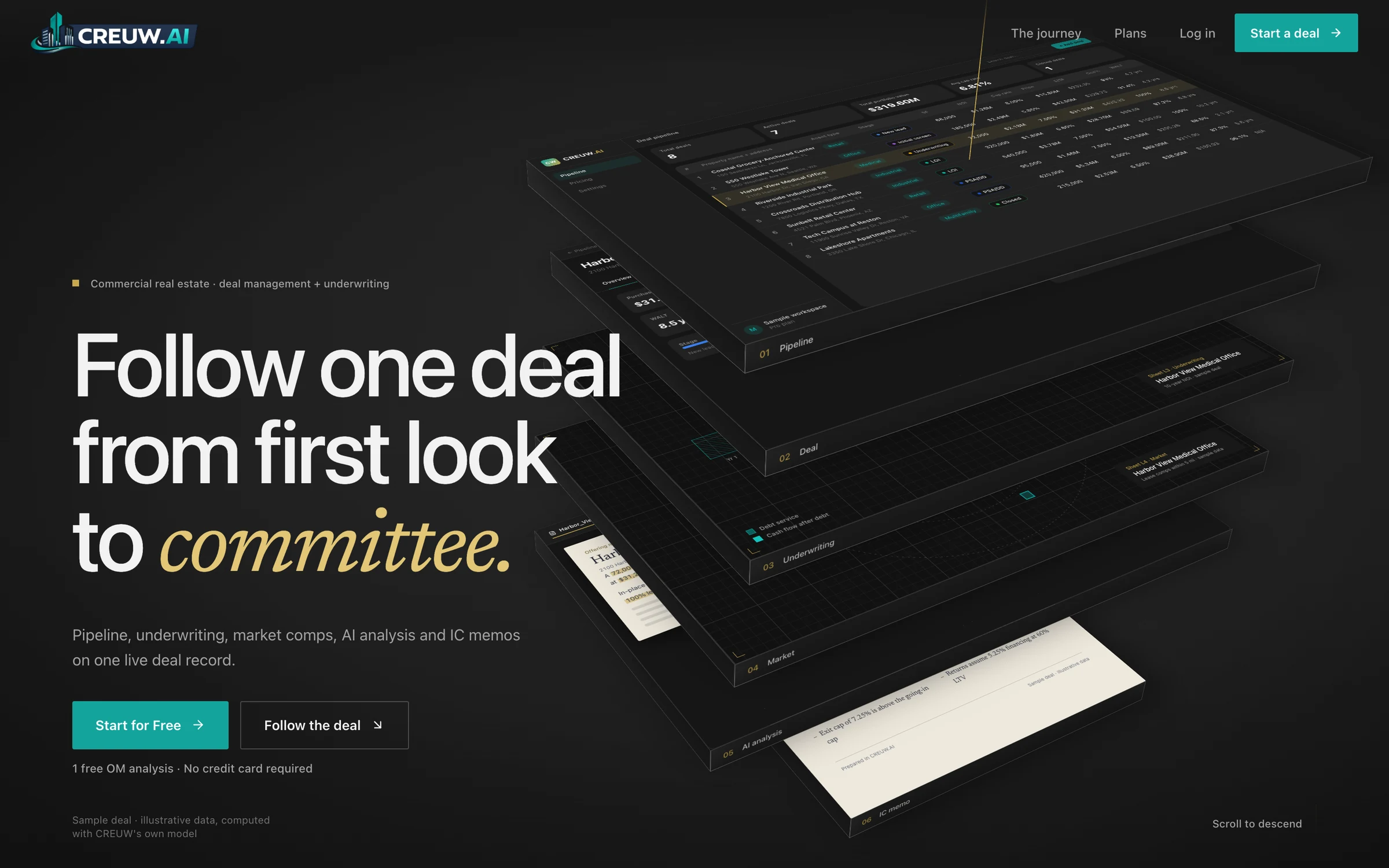
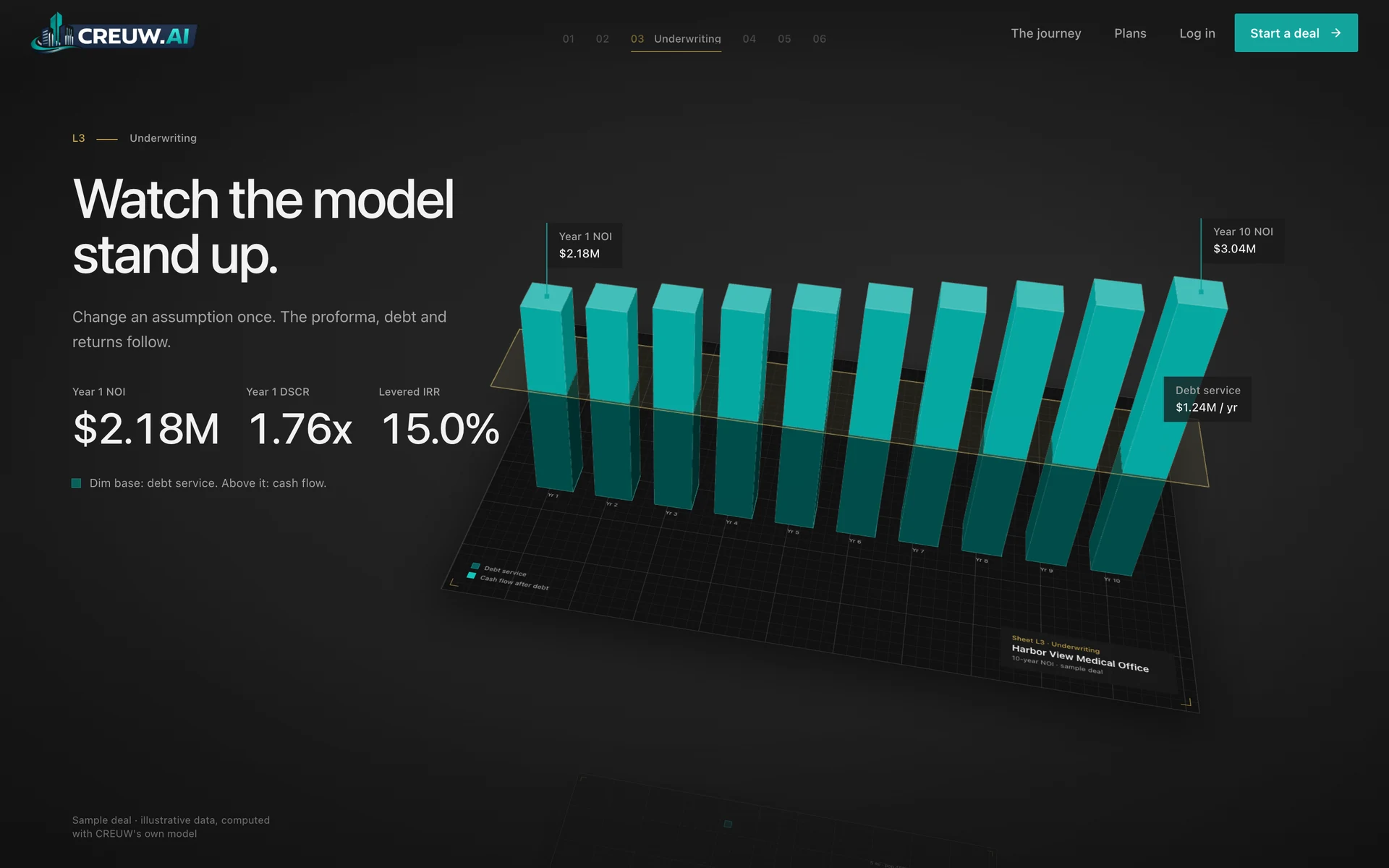
A commercial real estate platform that follows one deal from first look to investment committee.
In finance, trust is the product. We design and engineer experiences that are clear, dependable and secure by construction, on top of systems built to be audited.
A confusing screen or a failed transaction costs more than a sale. It costs confidence.
Identity checks and verification steps are necessary, and they are exactly where applicants give up.
New experiences have to be built on top of core systems that were never designed to be extended.
Balances, payments and reports have to be accurate and available, with no tolerance for drift.
Common products in this sector, and the discipline that leads each one.
Everyday money management designed to be understood at a glance.
Identity documents read and checked automatically to shorten sign-up.
Positions, transactions and performance in clear, accurate views.
Reliable connections to payment providers and core systems.
Machine learning that flags unusual activity for review.
General guidance, not legal advice. The specifics for your organisation are settled with you during Discover.
Holding funds, issuing cards and verifying identity are licensed activities in most markets. Many products reach them through regulated partners and their APIs, and that choice shapes the whole architecture.
Every movement recorded once, immutably, and reconcilable against the provider. It is unglamorous work that is very expensive to retrofit.
If a model declines, flags or scores someone, a person has to be able to see why. That rules out some techniques and is easier to design in than to add.
Yes. We integrate with payment providers, banking-as-a-service platforms and identity verification services, and build the reconciliation and error handling that sit around them.
As part of the architecture: least-privilege access, encryption in transit and at rest, audit logging, and review of anything that touches money or identity. Where you are subject to standards such as PCI DSS, we build to the scope your compliance team defines.
Yes, usually as a model that flags unusual activity for a person to review, with the reasons shown. We set the threshold with you, because it trades missed cases against false alarms.