

Pentagon Performance
The website for a Dubai studio that protects, wraps and restyles high-end cars.
Research, flows, prototypes and interfaces, worked out with engineers in the room, so what gets designed is what gets shipped.
Five stages on one artboard. Watch the grey boxes of the wireframe become the interface, then the product.
Problem: Before any screens: who is this for, what are they trying to do, and where does it go wrong today?
You get: A problem statement everyone has agreed to
Flow: The path through the task, including the awkward branches most people forget until launch week.
You get: User flows
Wireframe: Structure without styling, so the argument is about what goes where and not about the colour of a button.
You get: Wireframes and a clickable prototype
Interface: Type, colour, spacing and every state, drawn as a system of parts instead of a stack of one-off screens.
You get: Interface designs and a design system
Product: Tested with real people, specified for engineers who were in the room all along, and shipped.
You get: Tested designs, specifications, the product
Deliverables, not adjectives. Each one is something your team can open, click or build from.
This is the one this site is built from. Every specimen is the live part, not a picture of it.
Type
Colour
Nine parts neutral to one part red. Red marks a decision, never decoration.
Component
One button, defined once: its height, its states and what happens when you reach for it. Try it.
Rule
Twelve columns, one gutter, a two-pixel corner. Rules like these are what keep the hundredth screen consistent with the first.
UI/UX and product design at SOLOGEN covers the path from a problem to a product people can use without instructions: research, user flows, wireframes, interactive prototypes, interface design, design systems, usability testing and developer handoff.
The usual route. Designers and engineers on one team, so nothing is drawn that cannot be built well, and nothing is lost in a handover.
A standalone engagement. You receive the flows, the interface, a documented design system and specifications your own engineers can build from.
We find out what is and is not working, from data and from watching people use it, then improve it in steps you can release.
Yes. Design can be a standalone engagement. You receive the flows, the interface designs, a design system and specifications prepared for handover to your engineers.
Yes. We start by finding out what is and is not working today, from usage data and from watching people use it, then improve it in steps your team can release.
Yes. A prototype in front of five of the right people usually settles arguments that weeks of meetings cannot. We test before development starts, when changes are still cheap.
Design files, an interactive prototype, a documented design system and component specifications. If we are also building it, the handoff happens inside one team.
A set of reusable components and the rules for using them. If more than one person will design or build your product over time, it pays for itself quickly in consistency and speed.
Tell us about the product in the project brief, or ask to talk to a product designer if you would rather think it through together first.
The website for a Dubai studio that protects, wraps and restyles high-end cars.
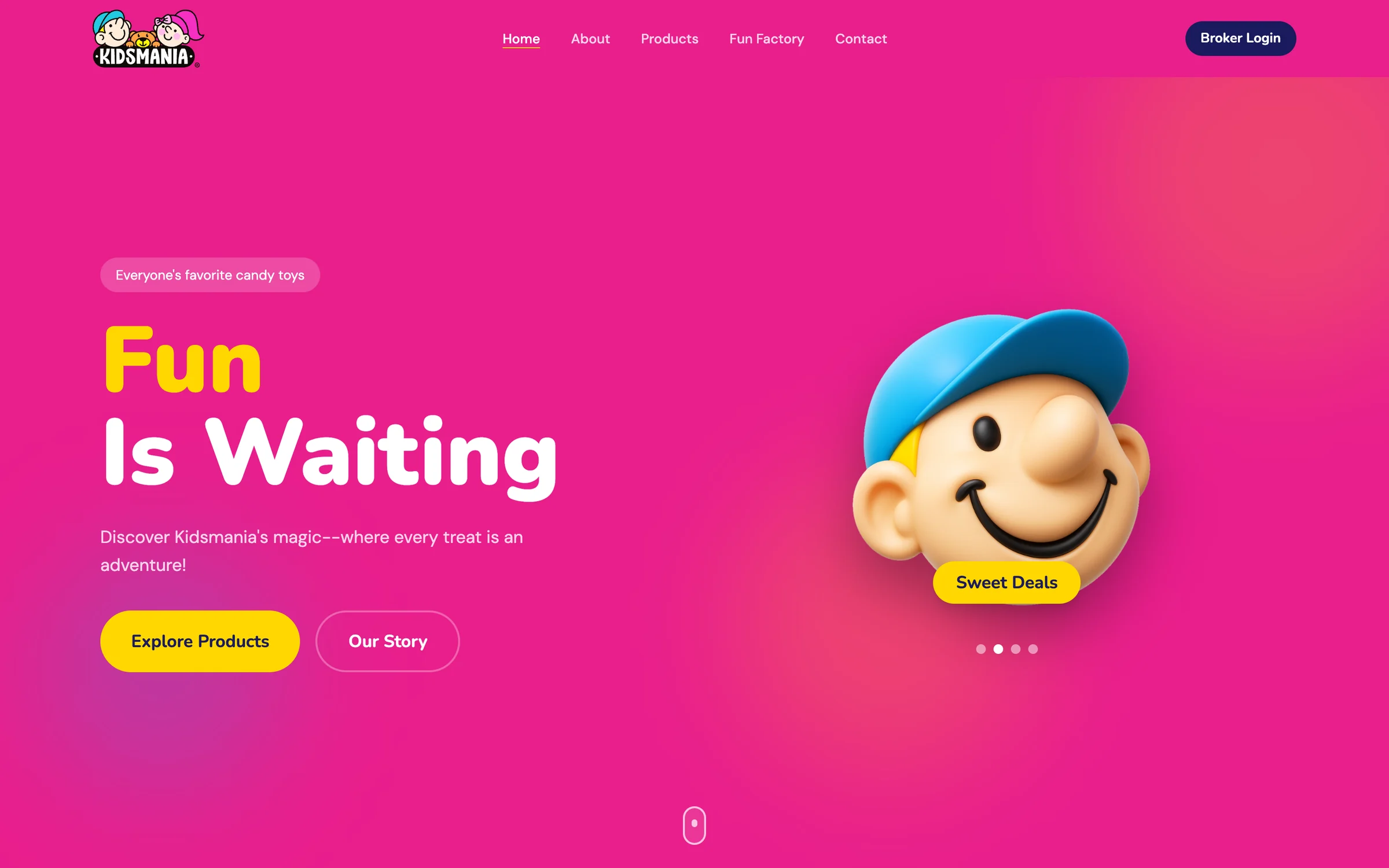


The website and product catalogue for a family-owned maker of interactive candy toys.