PipelineDealUnderwritingMarketAI analysisIC memo
CREUW AI
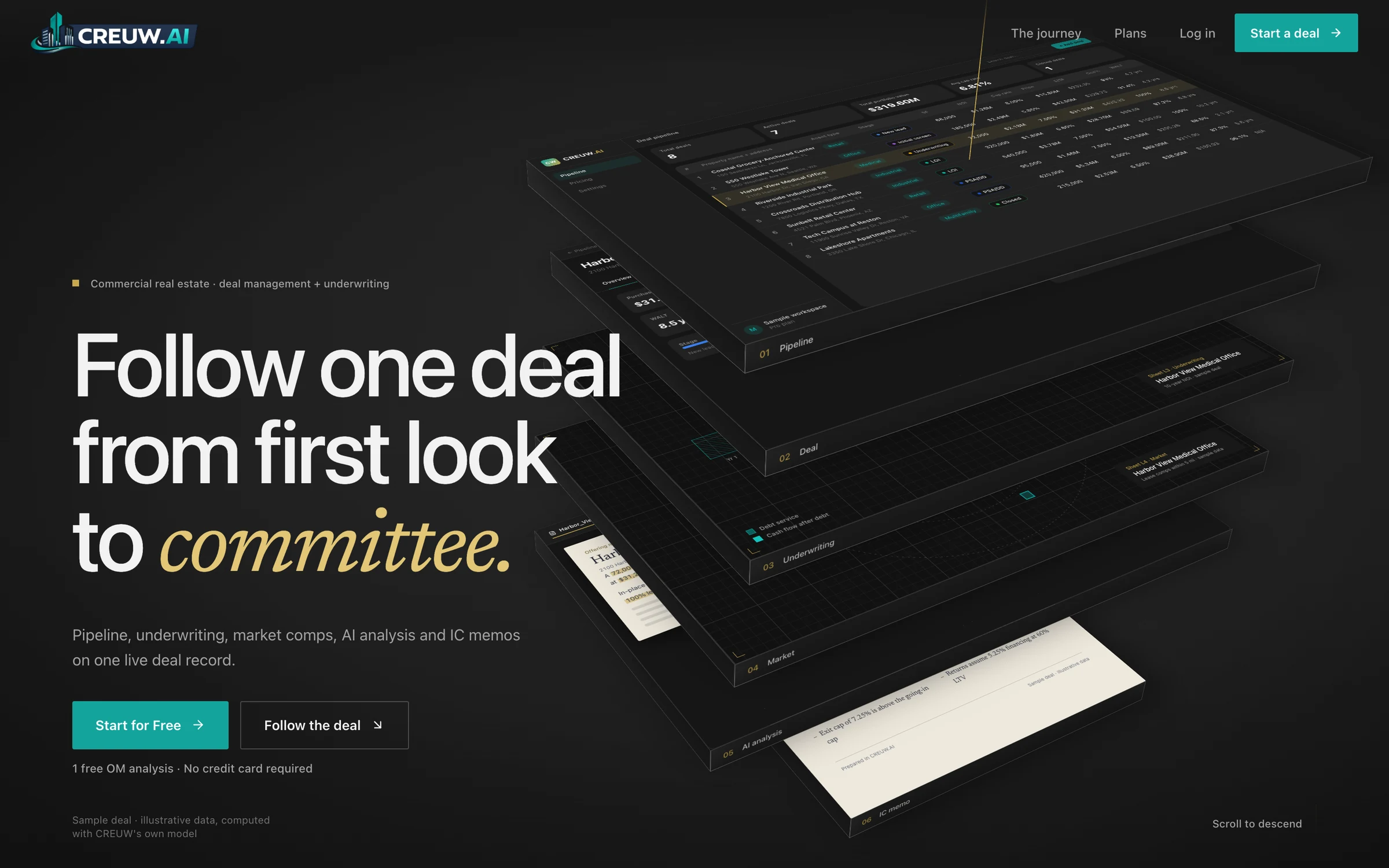
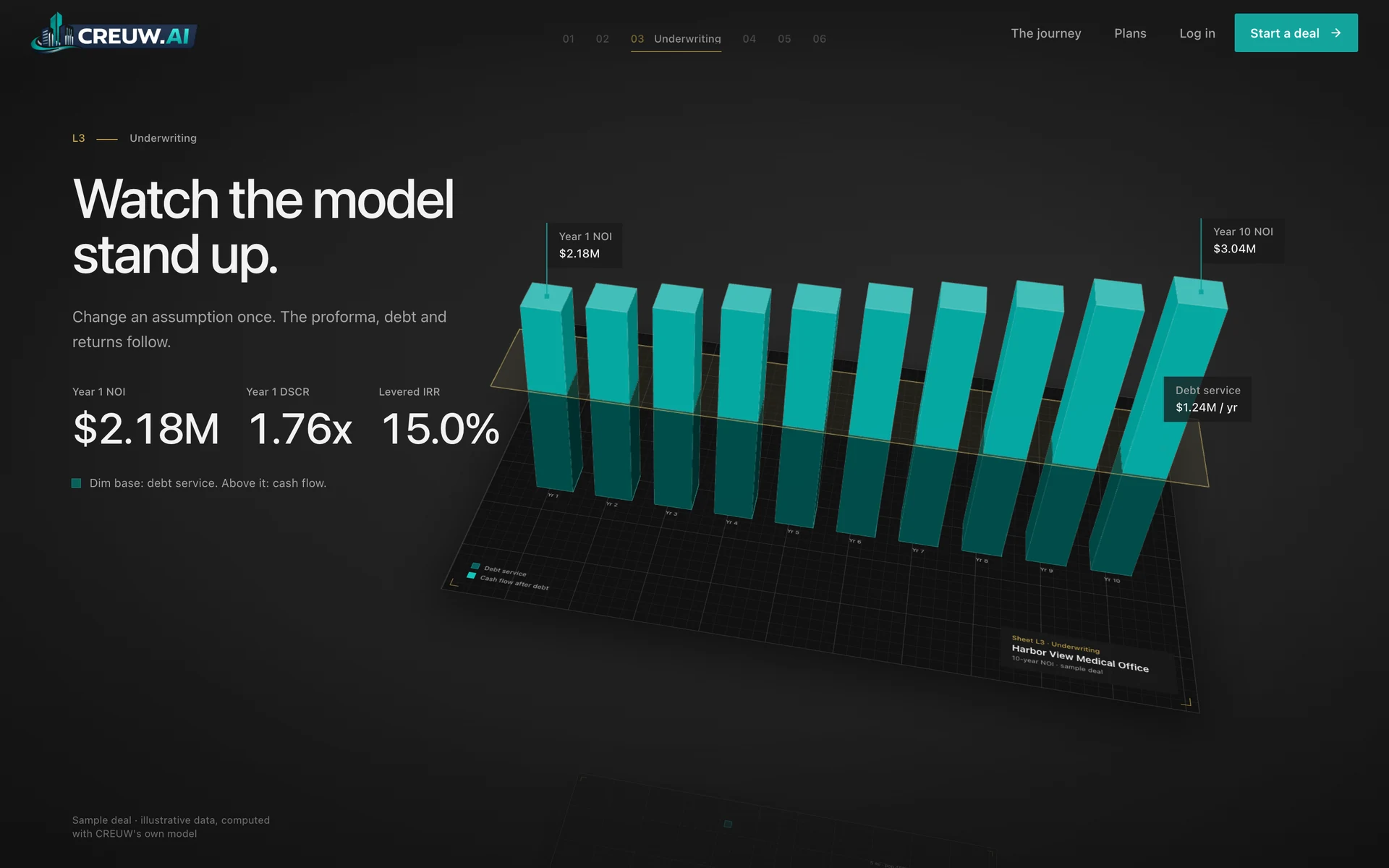
A commercial real estate platform that follows one deal from first look to investment committee.
We put AI where it earns its place, inside workflows, decisions and product features, and engineer it to be measurable, affordable to run and safe to depend on.
Data becomes understanding, understanding becomes a decision, a decision becomes an action. Pick a use case and read it across.
A customer email
Hi, our order arrived damaged. Can we get a replacement shipped this week?
Route to Returns
Confidence 0.94
Above 0.85 it acts. Below, a person decides.
A ticket is opened and a replacement drafted. An agent approves it with one click.
A scanned invoice
INVOICE 2291 — 14 line items — Net 30 — Total 18,420.00
Matches the purchase order
Confidence 0.97
Any mismatch goes to accounts, with the difference highlighted.
Entered in the ledger and queued for payment. Nobody typed anything.
A shopper's history
Viewed trail shoes and a rain shell. Bought running socks. It is October.
Show the head torch first
Relevance 0.81
Never suggest what they own. Never guess below 0.6.
Three suggestions on the product page, each with the reason it is there.
Three years of orders
Weekly sales by region, with holidays and promotions marked.
Order 1,240 units
Likely range 1,090 – 1,410
Always shown with its range, so a planner can overrule it.
A purchase suggestion reaches the planner on Monday morning, ready to adjust.
A question, typed plainly
what's our policy on returning opened items
Answer from §4
Grounded in a source
No source, no answer. It says when it does not know.
A direct answer, with the paragraph it came from one click away.
A request, in a sentence
Move Thursday's site visits to Friday and let the clients know.
Propose a plan
Waiting for approval
It may draft anything. It sends nothing without a yes.
The calendar is updated and four messages go out, after one confirmation.
We ask this first, on every project. Sometimes the honest answer is no, and we will say so.
The useful question is never whether a model makes mistakes. It is what happens to them. Move the bar and watch.
Lower the bar and more is automated, including more of the mistakes. Raise it and people review more. Where it sits depends on what a mistake costs you, so we build it adjustable and measured.
AI and machine learning development at SOLOGEN means building systems that read, classify, predict, recommend and act inside a product: language-model integrations and copilots, document intelligence, intelligent search, automation, and models trained on your own data.
The same sentence, in seven shapes. Most products need one or two of them.
Each feature has a test set built from real examples and a target agreed in advance. Quality is a number you can watch, before and after release.
What the system was asked, what it answered and what it cost are logged, so a strange result can be traced to its cause.
Running cost is estimated in planning and designed down: smaller models where they are enough, caching, batching.
Models improve and prices move. A clean boundary around the model means it can be swapped without rebuilding the product.
The logic, APIs and integrations behind the interface.
The backend carries your business rules. A well-structured one makes new features cheap and keeps the product stable when usage climbs.
The parts of a product that read, see, predict and decide.
AI choices affect accuracy, running cost and how much you depend on a single provider. We choose for the task and keep the option to change.
Where your product's information lives and stays correct.
Data outlives code. The right model keeps information consistent, queries fast and future reporting possible.
Where the product runs, scales and recovers.
Infrastructure decides reliability and running cost. We fit the platform to your scale, your team and any systems you already use.
Yes, and sometimes the answer is no. We look at the task, the data you have and what a mistake would cost. If a rule, a query or a better form would do the job, we will say so.
Yes. Integrating AI into an existing product is a core part of this service: connecting models to its data and its permissions, with our web and mobile engineers working alongside the AI team.
Every feature gets an evaluation set built from real examples and a target agreed with the people who will rely on it. Quality is measured before release and tracked afterwards, so it is something you can see.
It varies with volume and the models used, so we estimate running cost during planning and design around it: smaller models where they are enough, caching, and batching. You see the figure before you scale.
That is decided with you at the start: what leaves your systems, which providers are acceptable, what is retained and what is not. The architecture follows those constraints.
Describe the workflow or feature you have in mind in the project brief, or ask to talk to an AI specialist if you would rather test the idea first.
PipelineDealUnderwritingMarketAI analysisIC memo
A commercial real estate platform that follows one deal from first look to investment committee.
Drawing Takeoff Priced scope
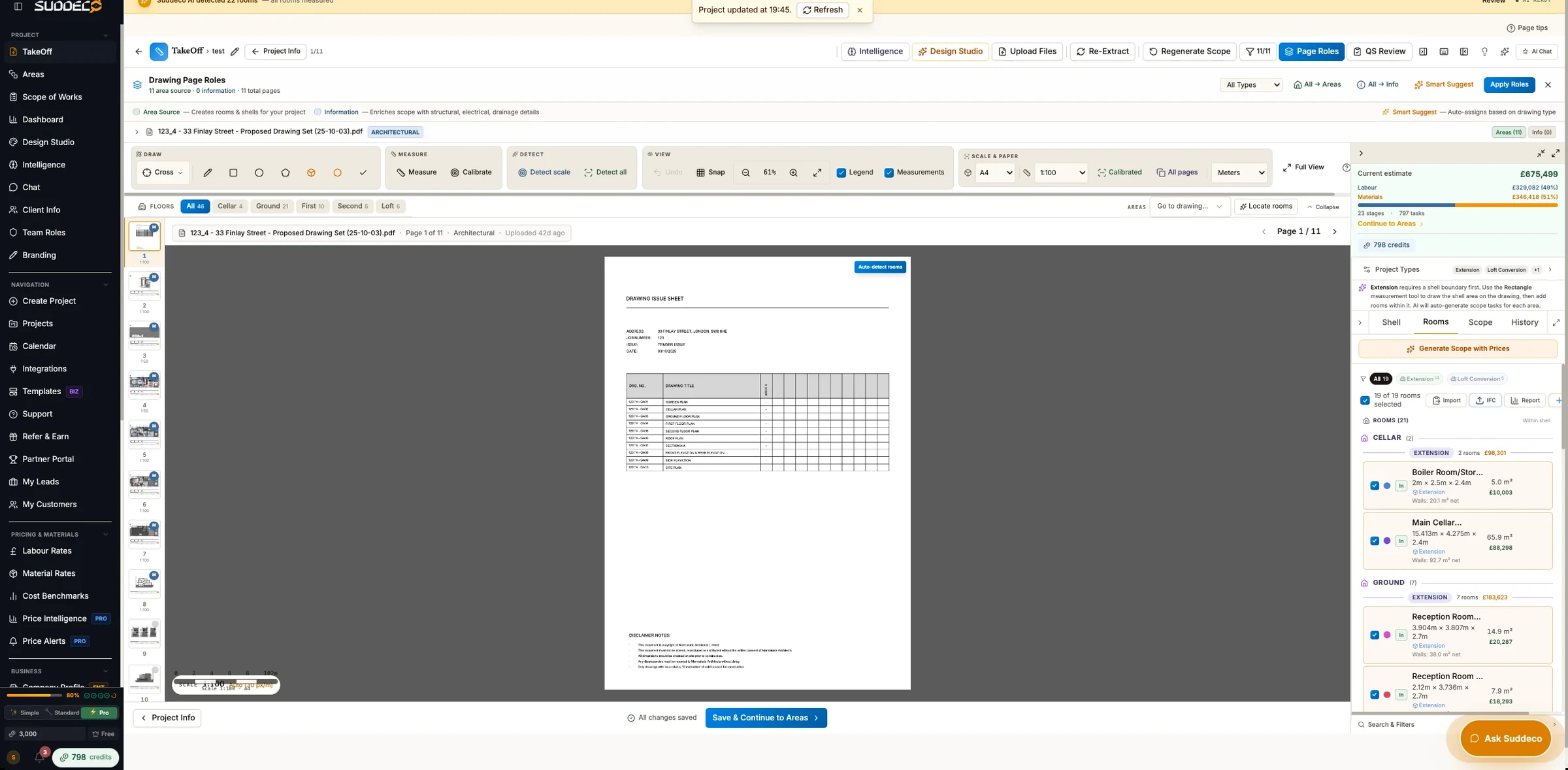
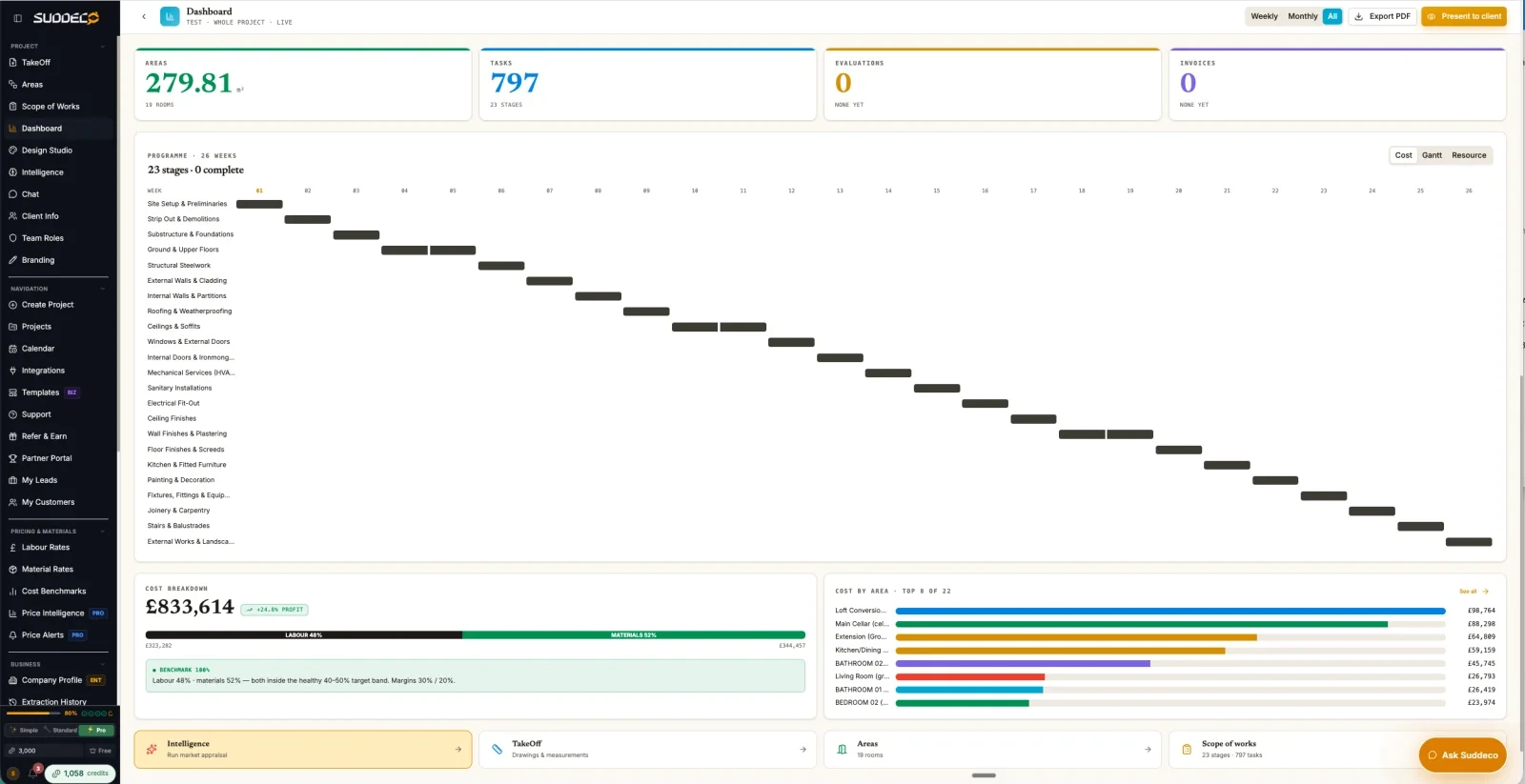
Construction software that reads a set of drawings and returns a priced scope of works.